Ninety minutes out of Zadar, the Dalmatian coast drops behind you and the Kornati take over: 89 islands of grey karst stacked across the horizon, divided by dry-stone walls and falling into the sea in white cliffs. There is no bridge, no ferry and no hotel here. Everything you do happens on, in or beside the water, and that shape runs through the whole list below.
You come by boat, swim in bays you can only reach by water, walk a handful of short marked trails, and eat grilled fish at a konoba a metre from the tide. The catch is logistics — tickets are charged per vessel, not per person, and a few zones are closed to everyone. Here is what is actually worth doing, plus the practical layer that decides whether the day works.
Kornati National Park at a Glance
Kornati National Park covers 217 km² of the northern Dalmatian Adriatic between Zadar and Šibenik — roughly four-fifths of it sea — and holds 89 islands, islets and reefs. Since 1980 it has been protected as the densest archipelago in the Mediterranean. The name comes from the Latin corona, crown, for the vertical cliffs that face the open sea on the outer islands.
Nobody lives here permanently. The land is almost entirely privately owned by families from Murter, who have grazed sheep and built walls on these islands for centuries — a history covered in the park's background guide. What that means for you is simple: visits are boat-first, infrastructure is minimal, and the emptiness is the point.
Cruise the Islands and the Crowns by Boat
Seeing the archipelago from the water is the reason most people come, and it is the one activity every visitor ends up doing. The question is which kind of boat. From Murter the park is only about 7 nautical miles away; from Zadar and Šibenik it is roughly 15, which is why tours from those ports run a full 9–10 hours door to door.
Organized day tours
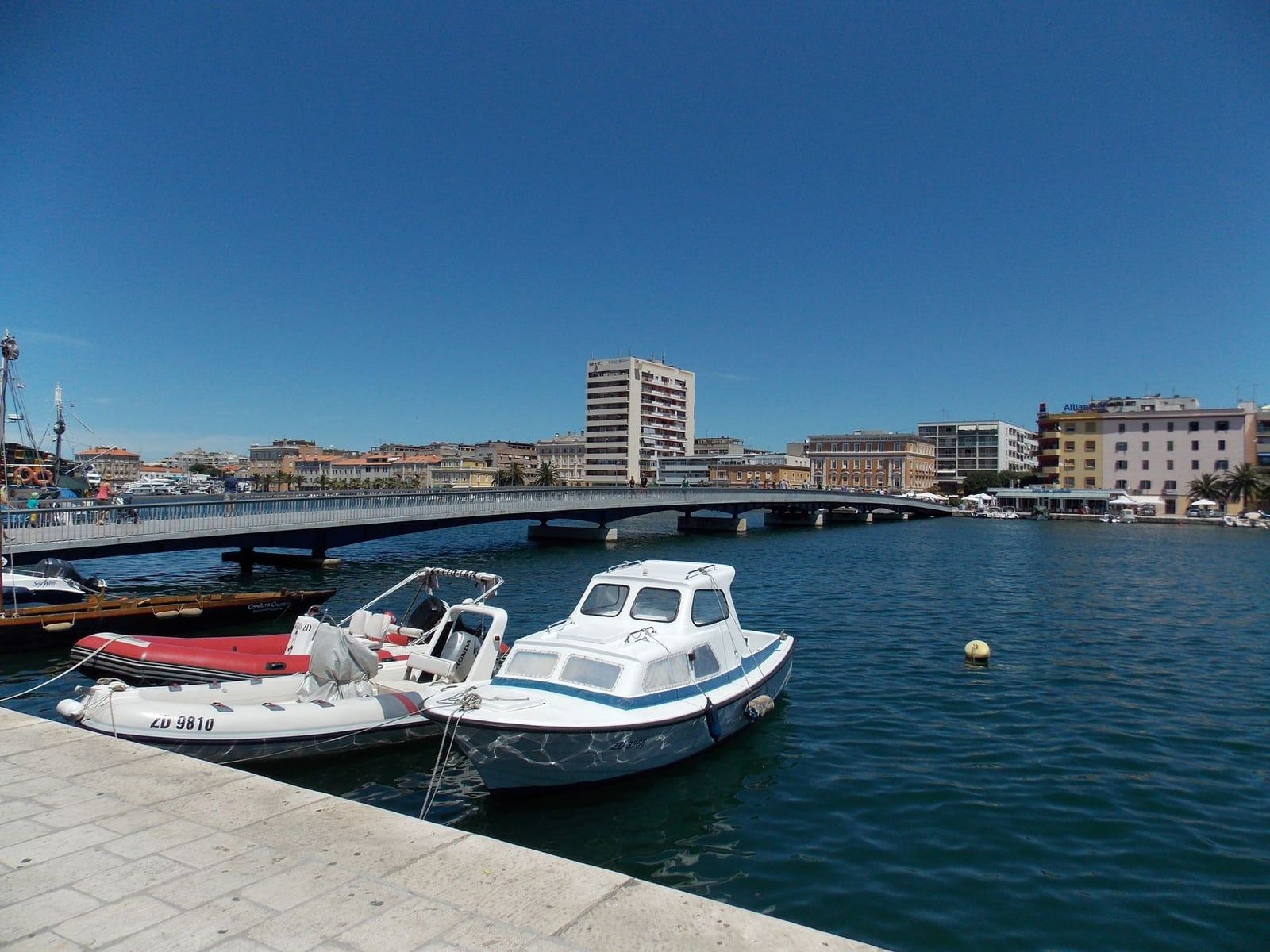
Full-day excursions depart from Murter, Zadar, Biograd na Moru, Vodice and Šibenik, usually around 9:00 with a return near 18:00. The typical package costs €35–40 per person and bundles the boat, a welcome drink, the park entrance ticket, lunch and a guide, with one or two swim stops built in. Daily departures are guaranteed in July and August; in May, June and September tours often run for groups that individuals can join, so email the operator a day or two ahead. If you are based in Zadar, tours leaving from Zadar add a coastal cruise to the day. To compare the full range, start with the overview of Kornati tours before committing to a port.
Day tour, charter, or your own boat
A rental bareboat reaches the park from Murter in about 45 minutes, versus two to three hours of crossing for the bigger tour boats — a real difference when the day is only so long. The trade-off is cost and paperwork: you need a skipper license, and the park ticket is yours to buy separately. A skippered charter splits the difference, and a guided kayak excursion is the low-key alternative if you would rather paddle a bay than motor across open water. For more options on the water, browse the park's boat tours.
| Organized day tour | Own or chartered boat | |
|---|---|---|
| Cost | About €35–40 per person, ticket and lunch included | €25–45 per day ticket for a boat under 7 m, plus charter and fuel |
| License | None needed | Skipper license for bareboat, or hire a skipper |
| Crossing | 2–3 h crossing from Zadar or Šibenik | About 45 min from Murter |
| Flexibility | Fixed route and schedule | Your route, your anchorages |
| Best for | First-timers, families, one-day visitors | Sailors planning multi-day trips |
The crowns from the deck
The crowns are the Kornati's defining image: sheer white limestone walls where the outer islands break off toward the open sea, the work of ancient fault lines. Klobučar's cliffs top out at 82 m above the water and keep dropping more than 100 m below it. Mana's wall runs the longest cliff line in the archipelago at 65 m, with the ruins of a 20th-century film set still standing on its plateau; Rašip veliki reaches 64 m. Skippers slow down and circle here — it is the moment everyone on board goes quiet.
Not everywhere is open. Four strict-protection zones — around Purara islet with the Klint and Volić reefs, Mrtenjak, Kolobučar, and Small and Great Obručan — are closed to all visitors, boats included. The rest of the maze is fair sailing, threaded with sheltered channels between the islands. Roughly 300 berths are available, including ACI Marina Piškera on Panitula Vela, whose berth fee includes the park ticket.
A sample day route
If you are plotting your own course, the classic day works like this: cross early and anchor in Anica Bay on Levrnaka's southwest coast for a morning swim, cruise the crowns along the outer islands while the light is still flat, then stop at Tureta fortress and the Tarac church on Kornat around midday. Afternoon goes to a long lunch in a konoba bay such as Opat or Smokvica, and the day ends with the short hop to Telašćica on Dugi Otok — Lake Mir for a final swim, then the Stene cliffs glowing at sunset before the crossing home.
Swim and Snorkel the Best Bays and Beaches
On islands of bare rock, a good swim stop is currency, and Kornati has a handful that tours return to every single day. The water is the draw: exceptional clarity, fed by 353 species of algae and meadows of endemic Posidonia seagrass — what locals call the lungs of the sea. Swimming is free and needs no permit almost everywhere, the four strict-protection zones excepted.
Lojena beach on Levrnaka
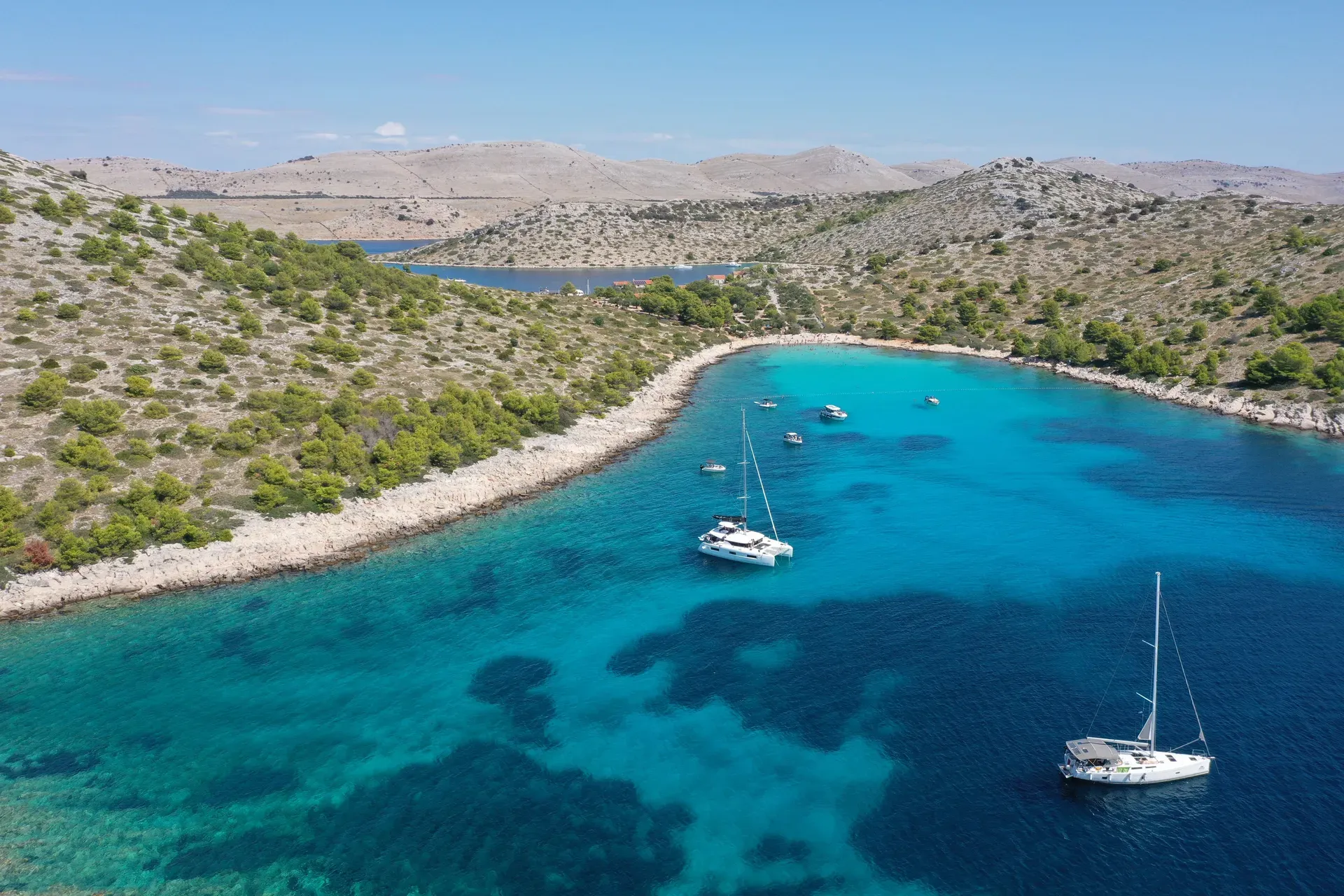
Lojena is the only natural sandy beach in the whole archipelago, a pale crescent on Levrnaka's southern shore with turquoise shallows that warm fast. That combination makes it the midday stop on most tours, so in July and August you will share it. Go early or late in the season and you can have it nearly to yourself.
Anica Bay
On Levrnaka's southwest coast, Anica Bay is the deep, sheltered inlet guides call the pearl of the archipelago. The cliffs close in around the water, which makes it the best snorkeling of the standard stops — fish from the surface, rock faces dropping away below. Bring a mask; there is more to see here than at any sandy beach.
Strunac, Smokvica and Opat
Strunac Bay is the quieter anchorage pick, secluded and pristine when the tour boats are elsewhere. Smokvica and Opat, both on Kornat, pair a swim with lunch — Opat is a large bay with a restaurant and boat dock, so you can swim, dry off and eat without moving the boat. For where to point your mask and fins, the detailed Kornati snorkeling guide covers conditions bay by bay. One caution everywhere: cliff jumping looks tempting from a low ledge, and the underwater rock does not forgive a misjudged entry.
Dive the Underwater Walls
Below the crowns, the walls keep going — over 90 m down on the Piškera side — and they are the reason divers come to Kornati. The rock faces are hung with red and yellow gorgonians, sponges and corals, with moray eels in the crevices and dense schools of fish along the drop-offs. The park's sea holds around 850 recorded animal species, including 61 corals and 185 fish.
The rules are stricter than almost anywhere in the Adriatic. Individual diving is forbidden outright — you dive only through a licensed center, mostly based on Murter, in one of nine approved zones, to a maximum depth of 40 m, and never at night between 19:00 and 07:00. A diving knife is the only tool you may carry. The park diving licence costs €15 per diver, and diving without one carries a €400 fine. Book through the centers; they handle the paperwork.
Hike the Marked Trails to the Viewpoints
Yes, you can hike in Kornati — but only on marked trails, because all of the land is private. Within that limit, the park maintains five official routes from easy to moderate, and the views over the archipelago's 35-km spine repay every step of hot stone.
Metlina
Metlina, at 237 m, is the highest point on Kornat and in the park, and the climb is rated moderately easy. From the summit the whole archipelago fans out below in long grey ridges — the single best land view in Kornati. Do it in the morning; the trail has no shade whatsoever.
Shorter walks and viewpoint loops
On Levrnaka, Veli vrh (118 m) gives a view over the surrounding islands for a fraction of the effort, and the Opat peak walk is similar. The two named loops run 4.9 km from Grpašćak and 4.0 km around the Telašćica Bay viewpoint, the latter pairing well with a day that ends on Dugi Otok. Educational geology and nature trails on Trtuša and Panitula are the family options. Whatever you pick: start early, and carry a hat, water and sunscreen — about 40 days a year hit 30 °C here, and there is nowhere to hide.
Historic Landmarks and the Dry-Stone Heritage
The islands look abandoned, but people have worked this karst for 1,400 years, and the leftovers are worth timing a stop for.
Tureta fortress
The 6th-century Byzantine fortress of Tureta on Kornat is the most prominent structure in the archipelago, sitting above Tarac Bay on the island's narrow southern waist. It is the park's best photo viewpoint: the walls frame the southern islands and the open Adriatic beyond. The ruins of a three-nave early Christian basilica sit at its foot, beneath the later church built on the same spot.
Our Lady of Tarac
The Church of Our Lady of Tarac, a 17th-century building raised on the foundations of that 6th-century basilica, is the archipelago's spiritual centre. Every first Sunday in July, hundreds of boats gather in Tarac Bay for Mass and the blessing of the fields and sea — if your dates line up, it is the one day a year Kornati feels like a village. Nearby stand dry-stone memorial crosses for the twelve firefighters who died in the 2007 Kornati tragedy.
Dry walls, sheep and the Kurnatari
Some 330 km of dry-stone walls cross the islands, built strong enough to withstand the bura and high enough to hold sheep in — around 2,000 still graze here. The owners, the Kurnatari, live on Murter and keep about 300 houses in the archipelago, most used only in the working seasons. Centuries of burning pasture for grazing is what gives the islands their Mars-like look. The one lighthouse, on Sestrica vela from 1876, stands on the archipelago's only forested island and can be booked overnight — the quirkiest bed in the park. On the way through Murter, the Roman ruins of Colentum at the island's northern tip make a free add-on.
Wildlife Above and Below the Surface
Bottlenose dolphins — the only dolphin species resident in the Adriatic — are seen regularly in the park's southern waters, most often on early morning and late afternoon crossings. Loggerhead sea turtles feed and overwinter here too. Scan the cliffs for birds: roughly 150 breeding pairs of European shag nest in the park, alongside peregrine falcons and eagle owls, and both the shag and the falcon sit on Croatia's Red List.
On land, look for wall lizards and geckos on the warm stone, butterflies in spring, and pine marten on the few wooded spots. The flora punches above the barren look: 537 plant species, including the cliff-endemic Dubrovnik knapweed growing straight out of the rock faces.
Eat in the Island Konobas
About twenty konobas and taverns dot the bays, nearly all summer-only, and a long lunch at one is a genuine Kornati activity rather than a refuelling stop. The menu is homestyle Dalmatian: scorpionfish and gilthead sea bream, mussels, whatever the boat caught that morning, all finished with local olive oil.
The signature order is Kornati lamb, a legacy of the centuries of sheep farming on the islands. Among the best-regarded tables are Konoba Piccolo in Smokvica Bay, the restaurant at Opat, and the eateries strung around Telašćica on the Dugi Otok side. Two practicalities: plan lunch around your route rather than hoping, and carry cash — many of these kitchens never see a card machine.
Telašćica Nature Park: The Unmissable Neighbor
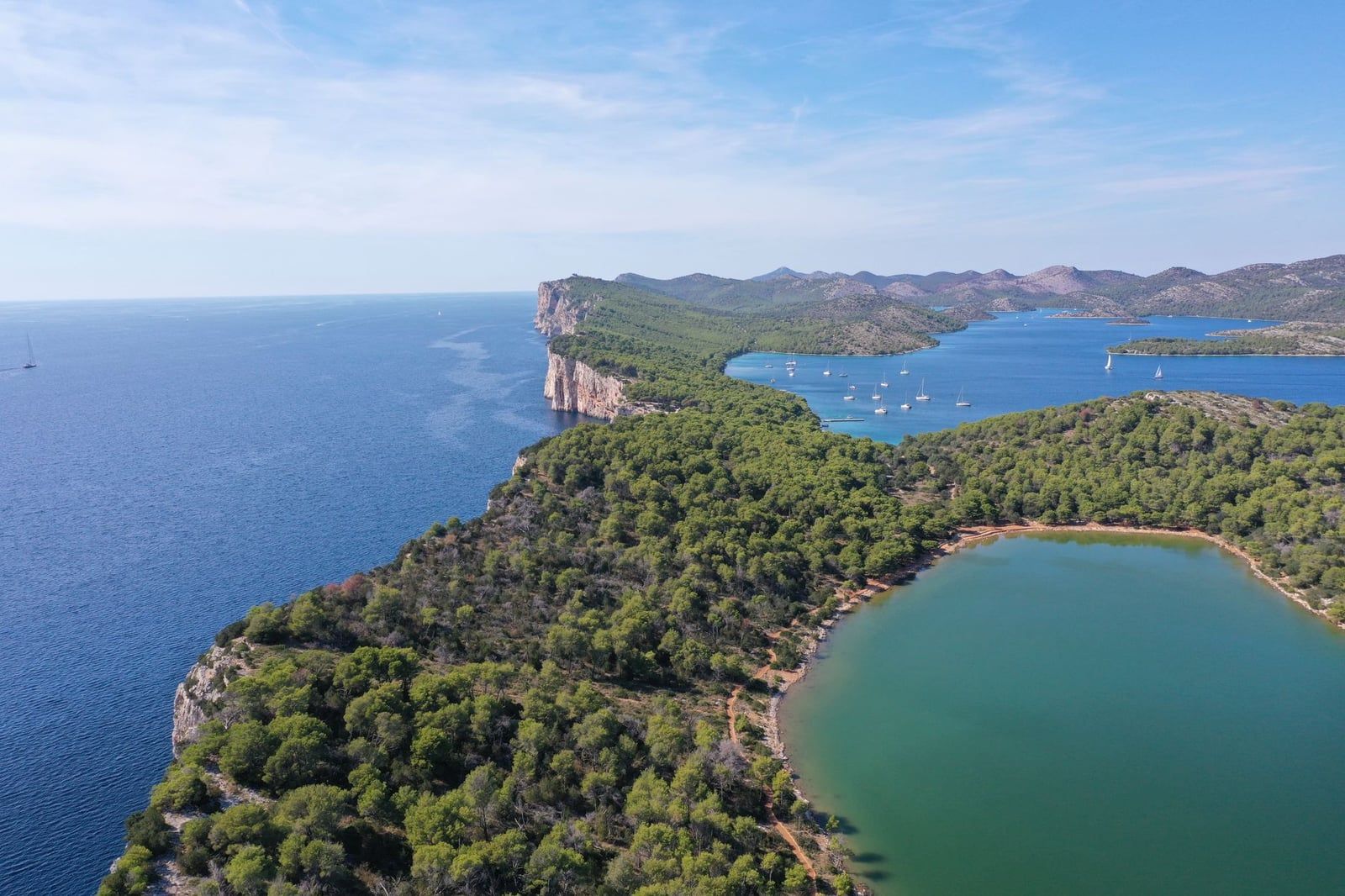
Almost every Kornati day ends up in Telašćica, the nature park covering the southeastern tip of Dugi Otok plus 25 islets, and that is no bad thing. Its Stene cliffs rear up to 161 m above the sea — higher than anything in Kornati — with viewpoints over the Kornati channel from the top.
Just behind the clifftop lies Mir, a shallow salt lake warm enough for a lazy swim a few steps from the sea, and wild donkeys roam the pine slopes. Logistics are simple: most day tours pair the two parks, and the 3-day combined Kornati–Telašćica ticket costs €55 off-season / €110 in season for a boat up to 6.99 m. If you are choosing a tour, pick one that includes Telašćica — the cliffs and the lake are the best single afternoon in the area.
Plan Your Visit: Access, Tickets, Rules and When to Go
There is no ferry and no bridge into the park. Your options are an organized day tour, a private or chartered boat, or basing yourself on Dugi Otok and crossing from Sali — a choice laid out in detail in the guide to getting to Kornati National Park. Murter is the efficient gateway at 7 nautical miles out; Zadar and Šibenik are about 15 nm, so those days run longer.
Tickets: charged per boat, not per person
The tariff surprises people: admission is per vessel, by boat length and season, regardless of how many people are aboard. Day-tour passengers pay nothing separate — the ticket is in the tour price. Everyone else should buy in advance, because tickets bought from the mobile ranger boats inside the park cost roughly double. Prices and conditions are consolidated on the park's hours and fees page.
| Boat length | Off-season (Jan–May, Oct–Dec) | Season (Jun–Sep) |
|---|---|---|
| Up to 6.99 m | €25 | €45 |
| 7.00–10.99 m | €30 | €65 |
| 11.00–17.99 m | €50 | €95 |
Three-day and five-day tickets scale up by length, and a 3-day combined Kornati + Telašćica ticket runs €55/€110 for the smallest class via the mySea portal. Buy online at the park webshop, Parks of Croatia or mySea, or at the ABA reception in Murter. Note the fine print: tickets cannot be cancelled, and one date change per season is allowed if requested by noon the day before.
Rules and overnight stays
The rulebook is short and enforced. No fires except in settlements and marked spots. Hike only on marked trails — the land is private. Leave plants, animals and stones alone, and don't stack cairns. Fishing needs a park licence (€20 for one day) on top of your ticket. Boaters may anchor and overnight only at the 16 designated bays, among them Stiniva, Šipnate, Lavsa, Ravni Žakan and Anica on Levrnaka. On land, camping is legal only at the authorized sites of Ravno, Žakan and Levrnaka; small island houses can be rented through Murter agencies. Most visitors sleep in Murter, Zadar or Biograd and treat Kornati as a day trip.
When to go
Late May, June and September are the sweet spot: the sea is warm, the weather is settled, and the bays are a fraction as busy as in peak summer. July and August bring the warmest water (around 25 °C), guaranteed daily departures and 2,700 annual sunshine hours — along with the year's biggest crowds and highest prices. Watch the forecast for the bura, the gusty north-easterly that can cancel open-water crossings; keep a spare day in your itinerary in shoulder season, and check the marine forecast the morning of your trip.
Frequently asked questions
How do you get to Kornati National Park without your own boat?
There is no ferry or bridge — access is by boat only. Organized day trips leave from Zadar, Murter, Biograd na Moru, Vodice and Šibenik, typically run 8–10 hours, and cost about €35–40 per person including the entrance ticket, lunch and a guide. Murter departures have the shortest crossing at around 7 nautical miles.
How much do Kornati National Park tickets cost?
Tickets are charged per boat, by length and season — not per person. A one-day ticket bought in advance is €25 off-season / €45 in June–September for a boat up to 6.99 m, €30/€65 for 7–10.99 m, and €50/€95 for 11–17.99 m. Buying from rangers inside the park costs roughly double. Day-tour passengers pay nothing separate.
Is one day enough for Kornati National Park?
Yes. One full day covers the classic highlights: the crowns from the deck, a swim stop at Lojena or Anica, Tureta and Tarac, and usually Telašćica. Multi-day visits suit sailors, who can overnight at the 16 designated anchorages with 3- or 5-day tickets.
Can you swim and dive in Kornati National Park?
Swimming is free almost everywhere, the four strict-protection zones excepted. Scuba diving is only allowed through licensed diving centers, in nine approved zones, to a maximum depth of 40 m, with no night dives between 19:00 and 07:00. Individual diving is forbidden; the park diving licence costs €15 per diver.
What is the difference between Kornati National Park and Telašćica Nature Park?
They are separate parks. Kornati is the bare-island archipelago; Telašćica covers the southeastern tip of Dugi Otok, adding the Stene cliffs (up to 161 m), the swimmable salt lake Mir and wild donkeys. Most day tours combine both, and a 3-day combined ticket costs €55/€110 for boats up to 6.99 m.
When is the best time to visit Kornati National Park?
Late May, June and September: warm sea, settled weather, far fewer boats. July and August have the warmest water and guaranteed daily tours but the biggest crowds. November to March, the tour fleet and island taverns shut down almost entirely.
Can you stay overnight in Kornati National Park?
There are no hotels. Sailors may overnight at 16 designated bays such as Šipnate, Lavsa and Anica on Levrnaka; land camping is allowed only at the authorized campsites of Ravno, Žakan and Levrnaka; and small island houses can be rented through Murter agencies. Most visitors stay in Murter, Zadar or Biograd.
Is Kornati National Park worth visiting?
For swimmers, snorkelers, divers and sailors, yes — the crowns, the water clarity and the empty karst are unlike anywhere else in the Adriatic. If you expect soft beaches, shade and full infrastructure, it will feel sparse. Pairing it with Telašćica's Lake Mir and Lojena's sandy beach rounds out the day.
Sources
- np-kornati.hr/index.php?Itemid=404&id=326&lang=en&option=com_content&view=articl
- np-kornati.hr/index.php?option=com_content&view=article&id=81&Itemid=281&lang=en
- np-kornati.hr/index.php?option=com_content&view=article&id=59&Itemid=248&lang=en
- np-kornati.hr/index.php?option=com_content&view=article&id=60&Itemid=225&lang=en
- np-kornati.hr/index.php?option=com_content&view=article&id=77&Itemid=235&lang=en
- en.wikipedia.org/wiki/Kornati_National_Park